This website received the AnySurfer label, a quality mark for accessible websites in Belgium. For more information, please visit www.anysurfer.be.
| Childhood, youth and family | Education, employment & training | Events, culture, sport & leisure | History & folklore | Town planning & housing | Environment & cleanliness |
| District contracts | Social & health | Public works & mobility | Prevention & safety | Participation & citizenship | Trade, economy & finance | Europe & international |
This page has been automatically translated from French into English by a translation software. Automatic translations are not as accurate as translations made by professional human translators. Nevertheless these pages can help you understand information published by the City of Brussels.
The principle of information at several levels can also be found in the new museum.
One first level of reading indicates that the information is accessible to all, young visitors and hurried visitors. A second level gives precise and sufficient additional information. Finally, a third level addresses specialized visitors or teachers preparing a visit intended for their pupils.
The first room gives a regional map of the network. This map is decorated with a relief model which shows the various valleys of the Region.
The rest of the room is dedicated to the big works of arching the Senne, with the construction plans, numerous photos of Brussels before and during the works,...
Peculiarity of the exhibition: the Museum presents all the elements used during the inauguration of the beginning of the works on February 13th, 1867 by King Leopold II.
The second room is reserved for the network of collection and for the fight against floods.
A magnificent model as well as a didactic film allow the visitor to understand why there are no floods in the city center. An animated map illustrates the route of the water to the water-treatment plants.
The third room is dedicated to the various techniques of installation and renovation of sewers.
Here also, a model explains the technique consisting in drilling a tunnel without disrupting the surface.
The last room of the first pavilion teaches us everything on techniques used by the sewer workers of the City to maintain the network.
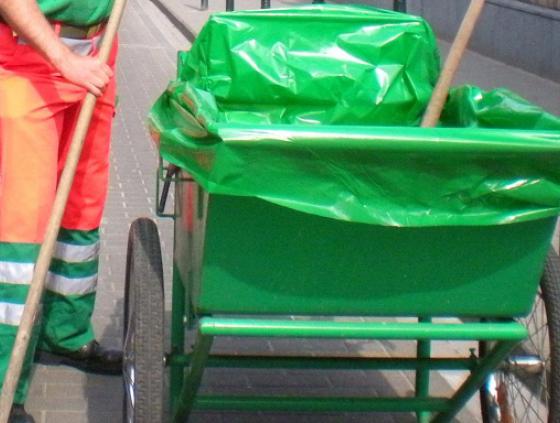
[rimgt6] It is in this room that we find the famous 'sliding car', that is still in function for the old network of the City.
The unexpected objects discovered in sewers and animals populating this dark world are also found there.
This room is a tribute to the sewer workers of the City of Brussels: the dangers, the difficulty of the work, the equipment and its evolution, the various tasks within the Service.
The visit ends by the purge of waters as well as by various related subjects: the water conveyance in Brussels, water and sustainable development, the history of the Pavillons de l'Octroi,...
Sewers Museum
Pavillon de l'Octroi
Porte d'Anderlecht
1000 Brussels
[plan]
Tel. : 02 279 60 13
museedesegouts@brucity.be
http://musees.bruxelles.be
Opening hours : from Tuesday till Friday from 10 am till 5 pm, guided tours on booking (only for groups)
Closing period : closed on Tuesday 24 January from noon
More information : Price rate: 3 euro per person, 2 euro for people under 15 years and groups (minimum of 10 persons). Free for the groups of schools situated on the territory of the Region of Brussels Capital (pupils and guides), for the inhabitants of the City of Brussels, and for children under 6 years.
Road works
Information and bookings
Studies and Permits Unit
Rue du Pont Neuf 12
1000 Brussels
[plan]
Tel. : 02 279 60 10
Fax : 02 279 60 62
museedesegouts@brucity.be