
What is it about?
The Heysel plateau, the site of the 1935 and 1958 Universal Exhibitions, is now home to a number of major facilities that have been added over the years without any real urban coherence.
The aim of the NEO project is to transform the 68 hectares of the Heysel plateau into a genuine urban district, attractive to residents and visitors alike, while ensuring excellent links with neighbouring districts and the city centre. This ambitious project will include housing, shops, green areas, recreational facilities, sports facilities and community infrastructures.
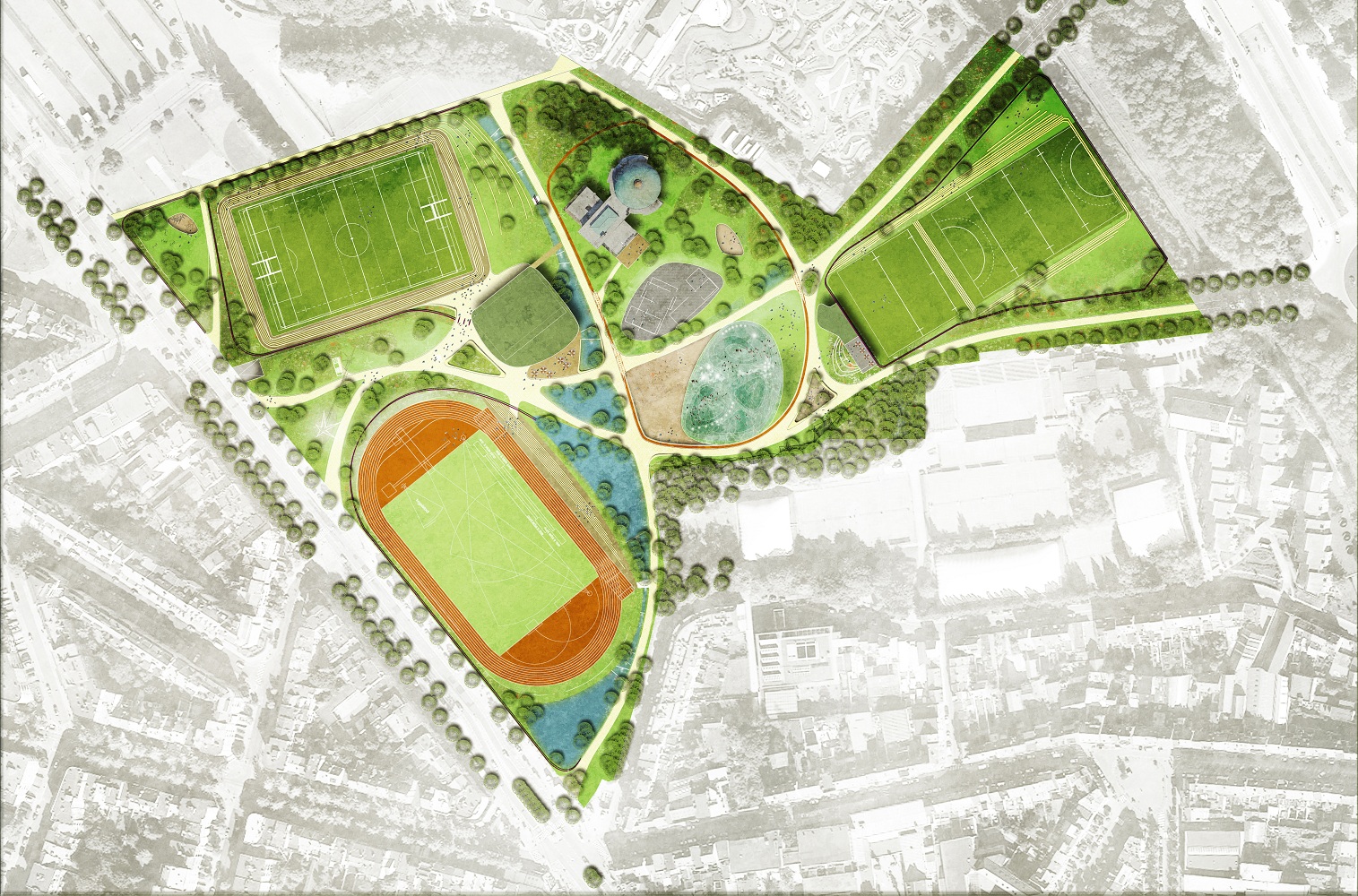
One of NEO's many initiatives is the sports park. This 27-hectare park will be a new space dedicated to walking and sport. It will include:
- A synthetic pitch for rugby and football
- Hockey pitches with a grandstand
- An athletics training ground with a 400-metre track
- An aquatic recreational area with waterfalls
- A space for walking beside the water and along the tree-lined paths
- The transformation of the main 'Les Archers' building into a multifunctional building for archery purposes, the integration of a specific sports hall for revalidation, the addition of administrative premises and the integration of a HoReCa facility
Presentation citizen meeting Sports Park (1.35 MB) (18 November 2020, in French and Dutch)
The gallery below shows the photos of the future sports park at the Heysel in Brussels:


What purpose?
This project meets the following ambitions and objectives:
- To transform the Heysel plateau into an exemplary new multifunctional city combining business and leisure tourism, a regional shopping and sports centre and housing, intended for international, national and regional visitors as well as local residents and new inhabitants
- To create public green areas and improve the environmental quality of existing ones
- To develop the green network and support active modes of transport and biodiversity
- To develop a strategy to reduce soil sealing in the City of Brussels and make its public spaces and land greener
- To accelerate the development of a safe, coherent, fast, comfortable and pleasant cycle network
- To ensure accessibility to all modes of transport for people with reduced mobility
- To respond to the lack of outdoor sports facilities
- To strengthen residents' links with water by its presence and related uses in public spaces
- To strengthen the resilience of the Molenbeek catchment basin in light of the growing risk of flooding by preserving existing green areas and incorporating rainwater management into development policies in an optimum manner
- To support the region in its efforts to combat flooding at Laeken by implementing alternative solutions, such as GIEP, and, as a last resort, a storm water basin
