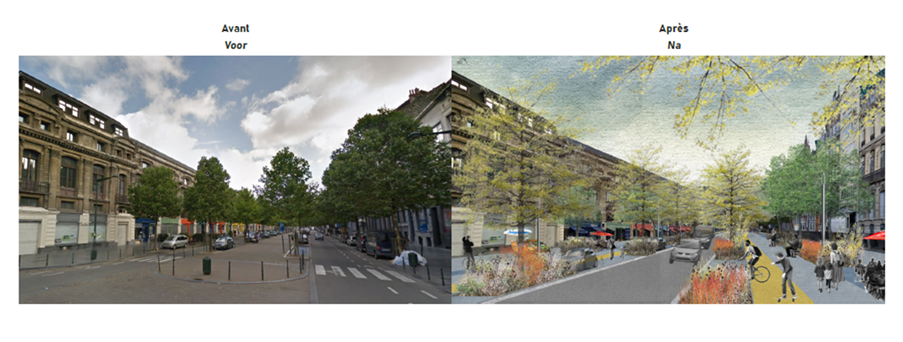
What is it about?
The Avenue de Stalingrad (Stalingradlaan) is located in the centre of the City of Brussels. It is a popular link on the city's north-south axis, connecting the Gare du Midi with the historic centre (including the Grand-Place and the Îlot Sacré).
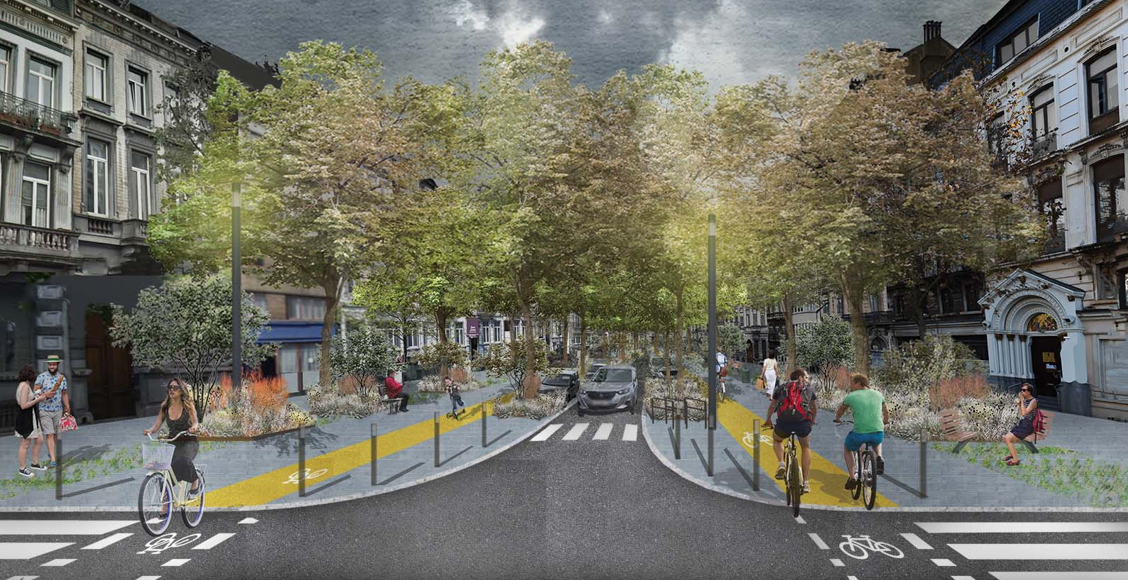
The Avenue de Stalingrad was initially heavily used by motorists, but is currently being renovated into an attractive and lively place for local residents and all other users of the public space (walkers, children, tourists, cyclists, shopkeepers,...). The aim is to turn it into a real gateway to the city.
The Avenue de Stalingrad redevelopment project meets the objectives and principles of the Pedestrianisation Plan and responds to the major challenges of the Midi and city centre districts, with Metro 3 currently under construction beneath the Avenue de Stalingrad.
In order to offer a renovated space once the surface works are completed, in early 2022, the City of Brussels submitted an application for planning permission for the Avenue de Stalingrad, between the Place Rouppe and the small ring road (not including either of these latter locations). This permit was issued at the end of 2023.
The people of Brussels can look forward to a ground-level avenue with areas for rest and relaxation.
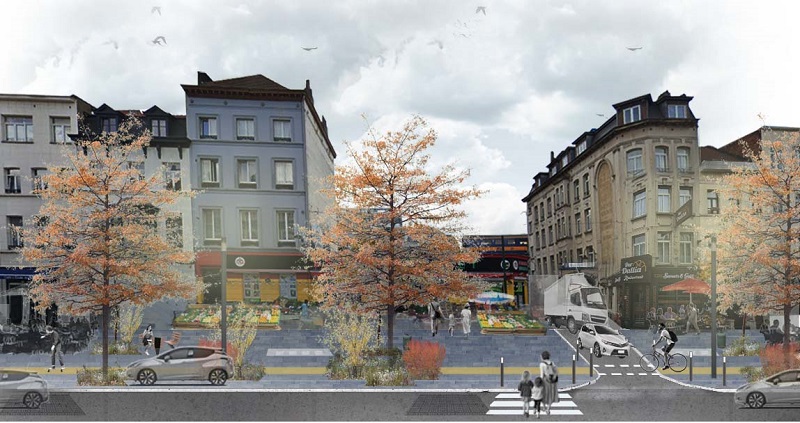
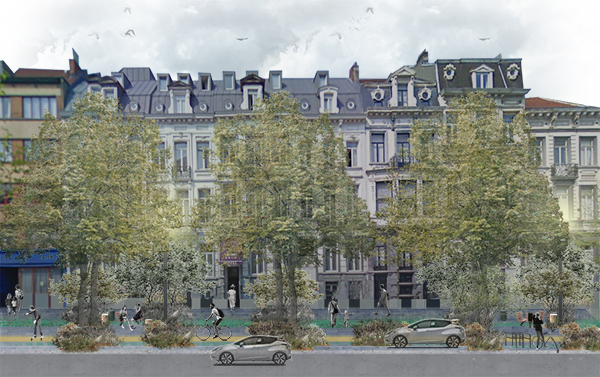
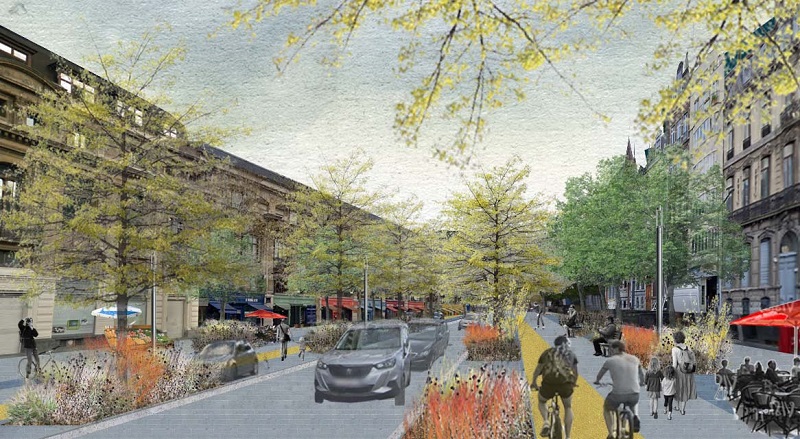
- A single lane will be accessible to motorists in the centre of the avenue. The reclaimed space will be given back to biodiversity, businesses and active modes of transport.
- A cycle path will be set out to simplify bike commutes. The entire development is designed for a range of uses, including shopping, walking and mobility.
- A 14-metre pavement, part of which will be available for use by business terraces, will ensure that terraces and pedestrians can co-exist without getting in one other's way.
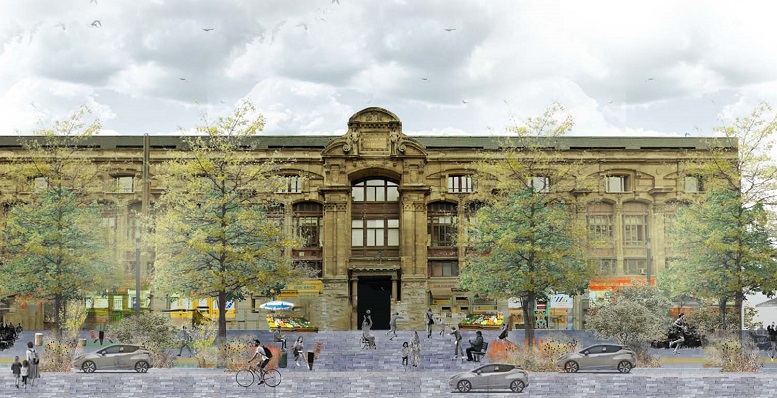
- The avenue will be punctuated by two main focal points: a forecourt in front of the Palais du Midi, highlighting its remarkable façades with benches and a water fountain, and a small square located outside the future Toots Thielemans metro station, where the Pasionaria artwork will be located.
- So as not to lose any of its architectural heritage, the style of the revamped Avenue de Stalingrad will be in keeping with that of a 19th-century boulevard. The four existing rows of trees will be restored to maintain this structure. Landscape quality will be enhanced by the replanting of 70 tall trees (for a total of 104 trees) and the planting of 168 shrubs and bushes, including multi-stems and low shrubbery.
Benches, bike storage and water fountains will complete the design.
To manage run-off water, the project calls for the creation of large permeable areas and the planting of a large number of plants. The permeable areas will include planting pits and strips of paving made of permeable materials.
The first phase of construction on External siteMetro line 3 has been under way since 2020. Most of the works for the new Toots Thielemans station and the creation of new metro tunnel sections, designed to connect to the existing pre-metro tunnels, is taking place on the Avenue de Stalingrad. This has a significant impact on the day-to-day lives of local business owners and residents.
The redevelopment of the avenue will be planned according to the progress of works on Metro line 3 and the impact of the site on the Palais du Midi.
The project has been developed with public participation in mind, taking into account the contributions and opinions of local residents:
What purpose?
This project meets the following ambitions and objectives:
- To develop the green network as a support for active transport methods and biodiversity
- To rebalance and diversify the uses of public spaces
- To improve the safety and quality of public spaces for the purposes of living and environmental resilience
- To develop a strategy to reduce soil sealing in the City of Brussels and make its public spaces greener
- To speed up the development of a cycle network and provide appropriate bike parking facilities
- To ensure accessibility to all modes of transport for people with reduced mobility
- To incorporate inclusiveness criteria into public spaces from the design stage
- To ensure the coherent development of public spaces to highlight their heritage quality
- To strengthen residents' links with water by its presence and related uses in public spaces
- To strengthen the commercial appeal of shopping centres by improving the quality of public spaces and enhancing neighbourhood identities