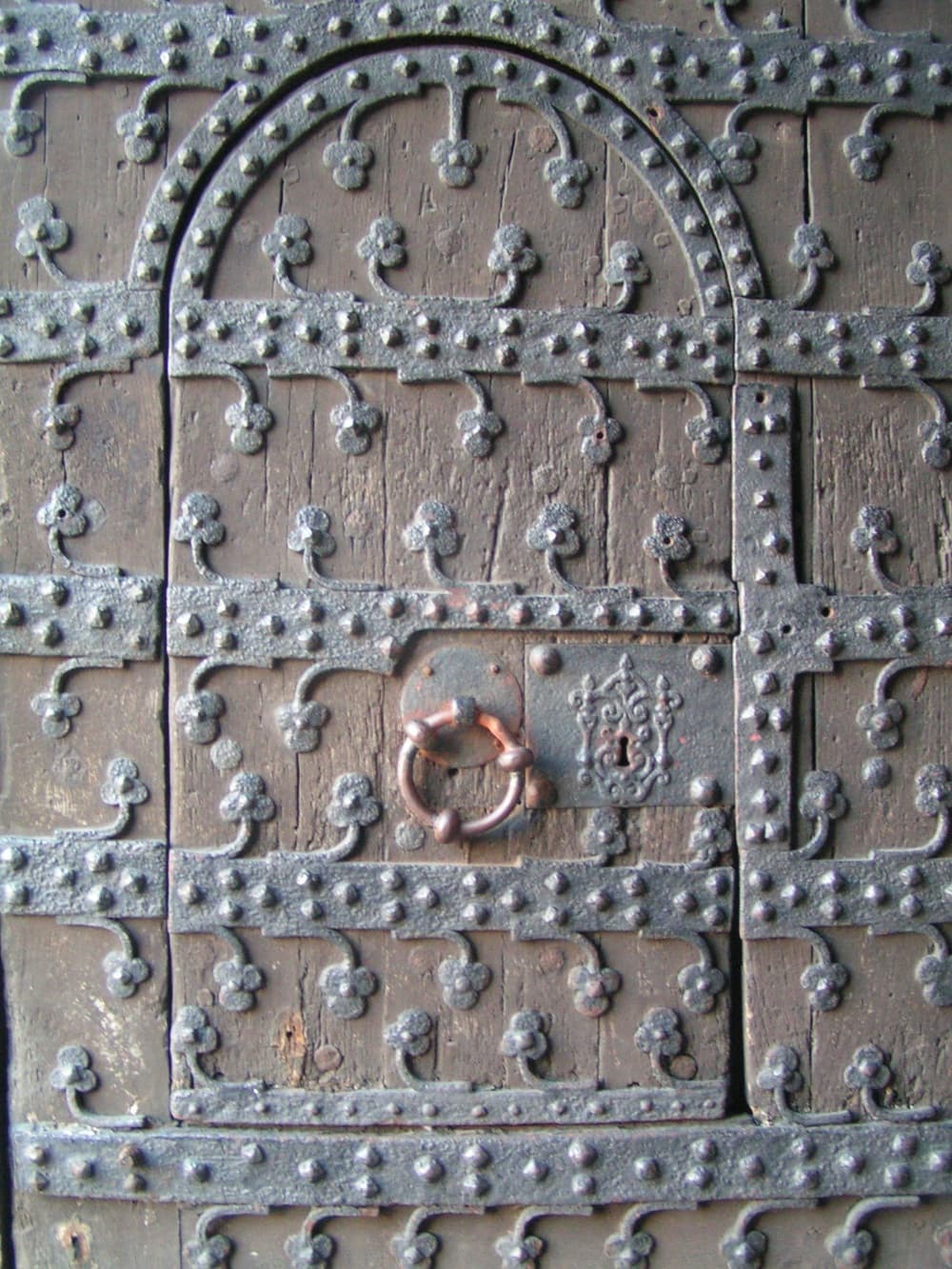
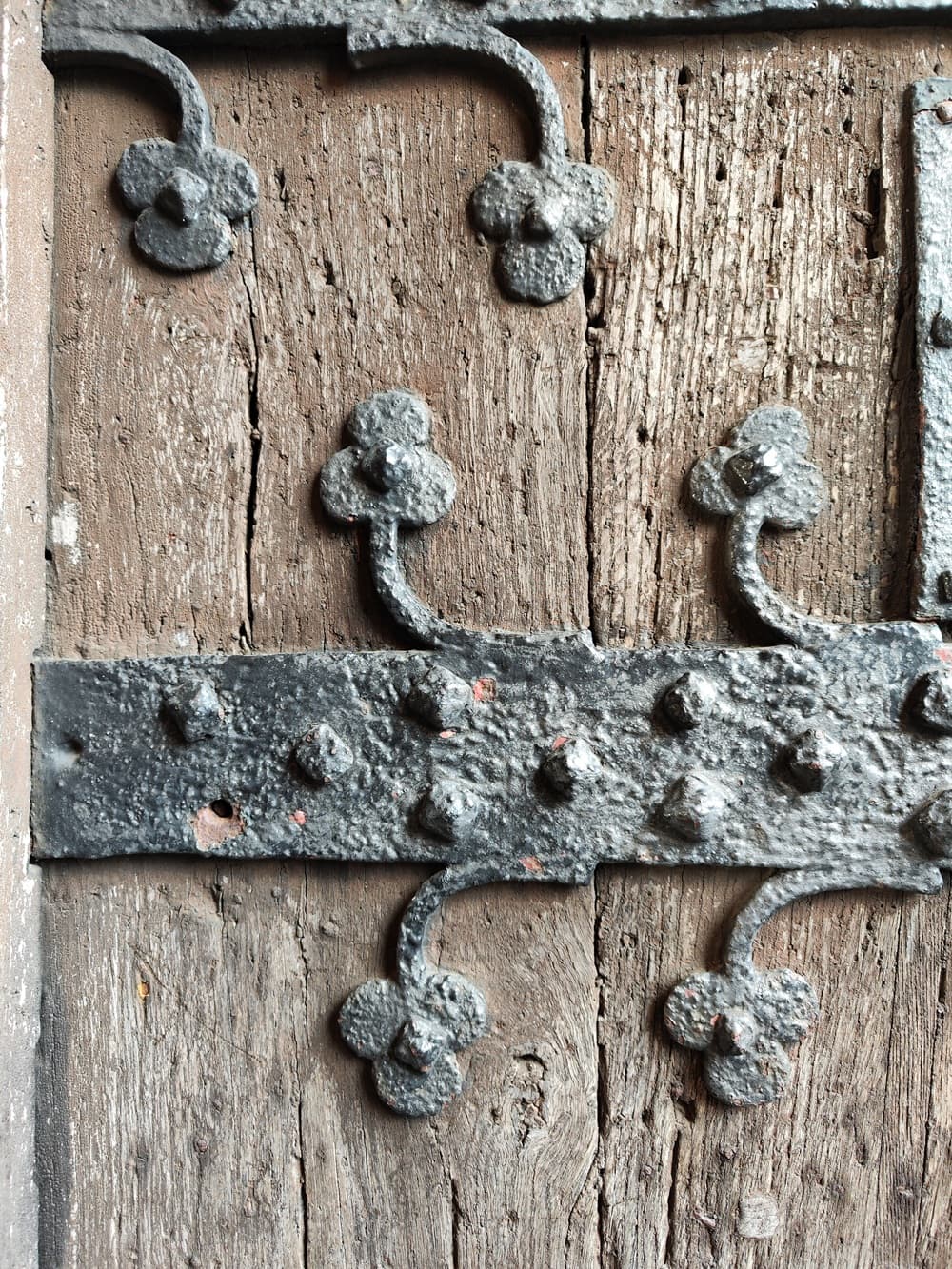
Restoration works on the two external gates at the City Hall of Brussels started in May 2026. The City is working on the gate at the Rue de l'Amigo, which dates from 1717, as well as the one on the Grand-Place side, which dates from the 15th century.
These works are mainly being carried out in the joiner's and metalworker's workshops. Follow them closely here!
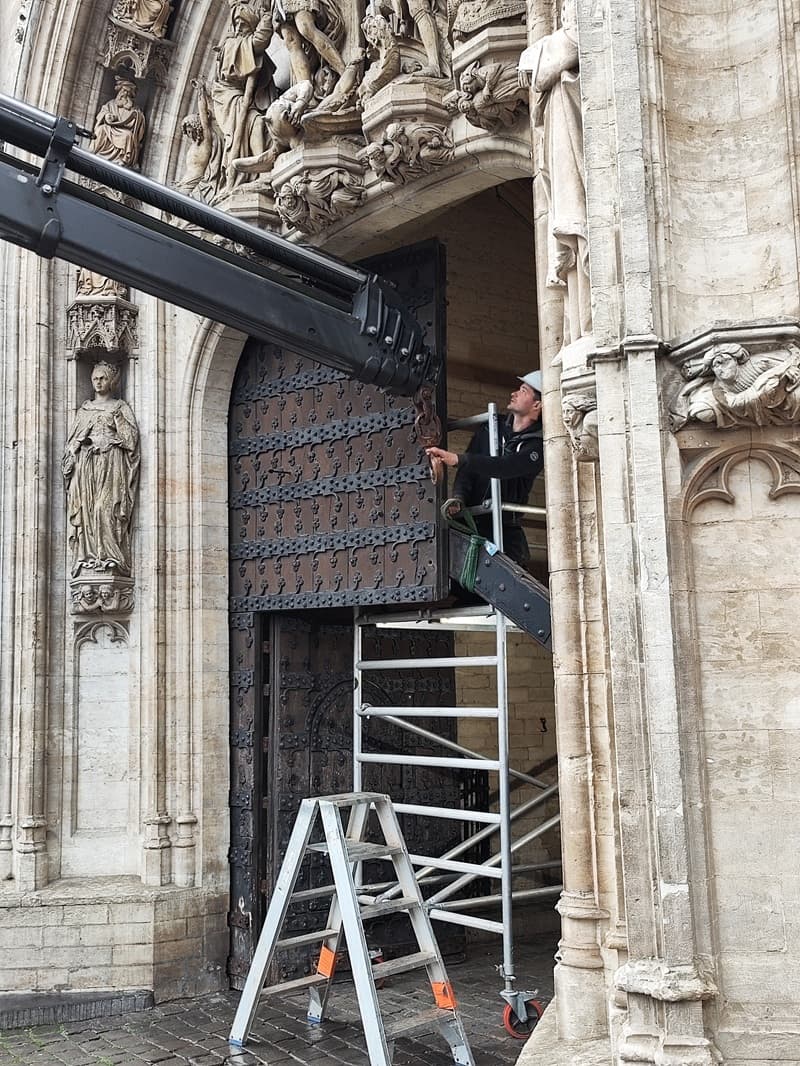
From 6 to 8 May 2026, the City carried out the dismantling of the two external gates of the City Hall of Brussels.
Once the site set-up was complete on the Grand-Place, the joiners and metalworkers fitted a metal frame to each leaf of the historic gate. Using a crane, they lifted the leaves by the metal frame to remove them from their hinges. This frame helped to preserve the geometry of the leaves and prevent them from becoming warped during the operation.
The same procedure was carried out on the gate leaves at the Rue de l'Amigo. As the street is narrower, the challenge was different.
Each gate leaf was placed in protective crates for transport to the workshop of the joiner and metalworker.
At the same time, temporary gates were installed to ensure the inner courtyard of the City Hall remained secure and closed off.
The operation took 2.5 days - a remarkably swift historic intervention given the scale of the task!



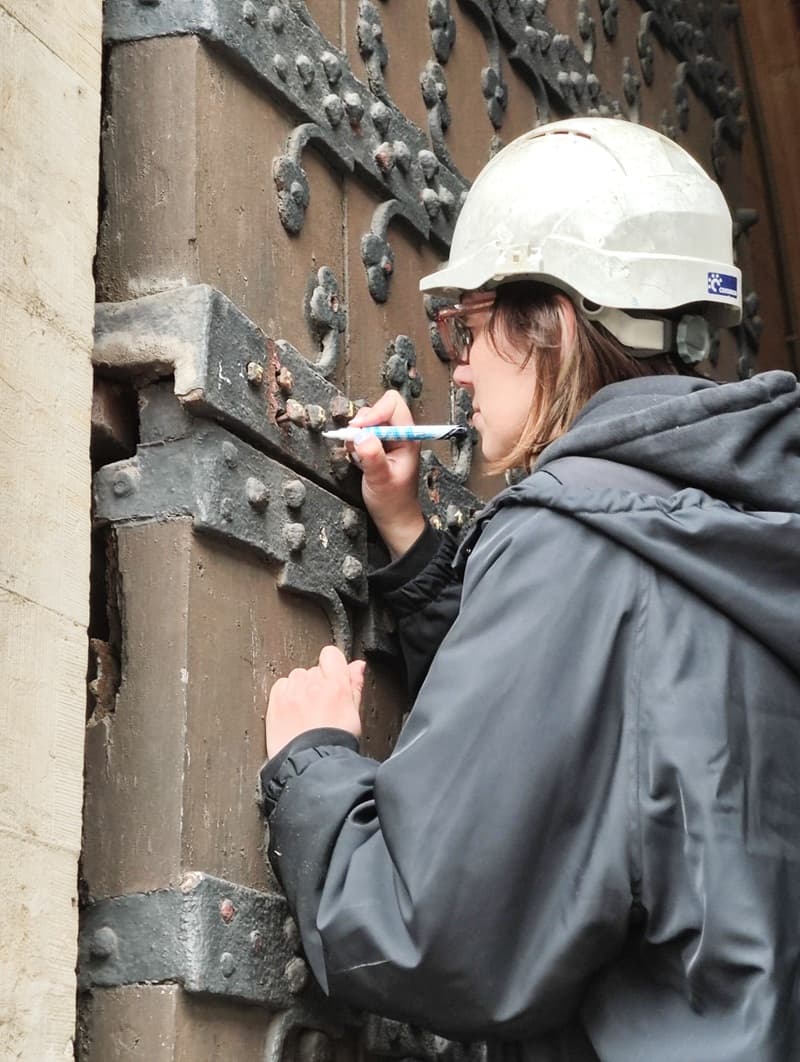

The construction of the City Hall of Brussels, started in the spring of 1402, is completed in 1454 following the installation of the statue of Saint Michael at the top of the spire. In 1695, King Louis XIV orders Brussels to be bombarded with cannonballs. The City Hall, which is an ideal target for the French artillery, is severely damaged by the shelling.
Reconstruction works are carried out swiftly, with Guillaume de Bruyn, the City's Works Controller, supervising the entire project. The construction of a new wing on Rue de l'Amigo and, at the junction, Rue Tête d'Or and Rue Charles Buls, on the site of the former Cloth Hall, is entrusted to the architect Corneille van Nerven.
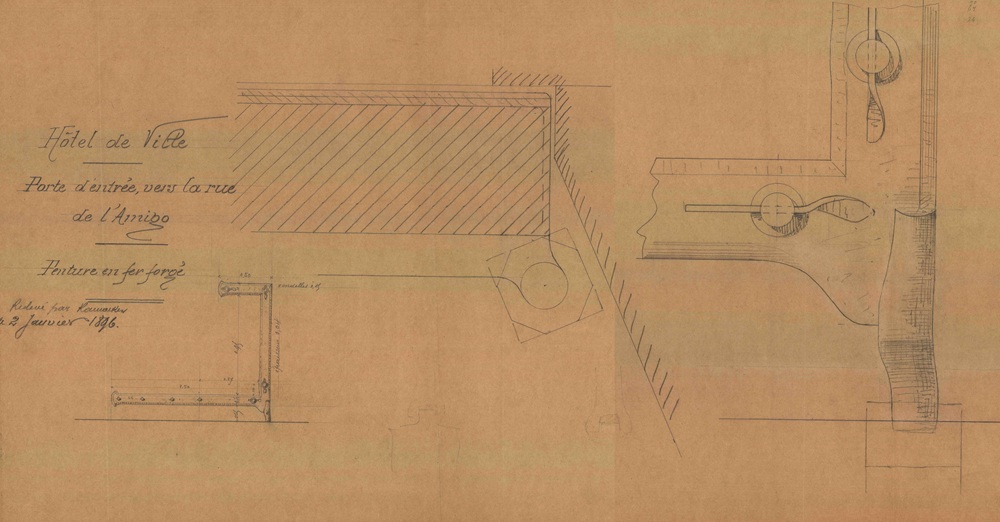
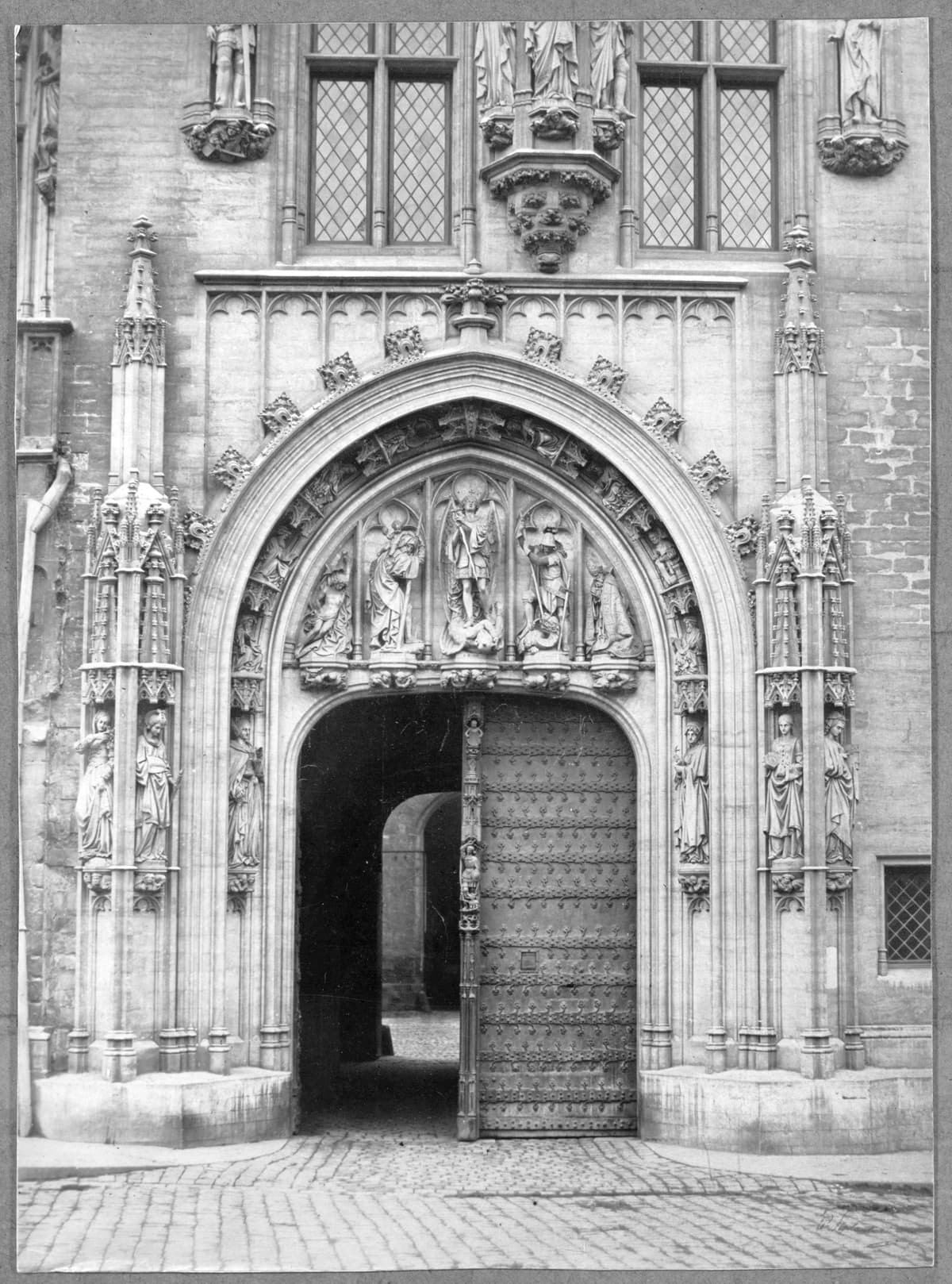
The date of 1717 for the gateway on the Rue de l'Amigo, which was known from historical records, is confirmed by preliminary studies. This corresponds to the reconstruction of the rear part of the building following the bombardment of 1695.
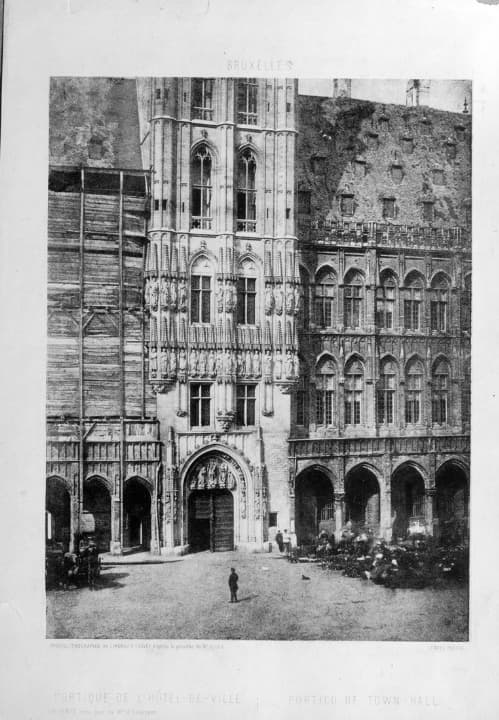
The date of the gate on the Grand-Place is established as the early 15th century, marking the start of construction of the Gothic building.
In both cases, the gates are contemporary with the construction of the building to which they provide access. They have survived the centuries without big alterations. Their value is therefore of the utmost importance and justifies their restoration.
Rue de l'Amigo gate
In February 1889, Pierre-Victor Jamaer, the City's architect, proposes commencing 'restoration' works on the gate given its poor state of repair. These works involve dismantling it for repair in a workshop and replacing it temporarily with a makeshift gate.
Grand-Place gate
The archives that have been uncovered (the oldest of which date from the early 19th century) bear witness to the existence of occasional repairs carried out between 1814 and 1852: repainting with lime wash, replacement of the lower section of the gate, the hinges and the fitting of a bracket, and replacement of nails, eyelets and a gate hinge. The door's lintel is restored by the sculptor Geerts.
Source: Historical study of the City Hall's portals by Quentin Demeure, Historical Heritage Service, 2006.




.JPG)