The City of Brussels is taking part in the European RAINBOW project. RAINBOW, funded by the Interreg North-West Europe programme, runs from January 2026 to June 2029.
This project brings together cities, universities and associations from several North-West European countries. Together they are developing solutions to:
- improve the management of the water cycle in cities, from the soil to the groundwater
- support the transition towards 'sponge cities'
More info:
In cities, intense rainfall, droughts and soil sealing are putting pressure on infrastructure and water resources.
When surfaces are sealed, rainwater can no longer infiltrate into the soil. It runs off, overloads the sewers and causes flooding, while depriving groundwater of its natural recharge. In the long term, this weakens the water balance of the territory and its resilience to climate change.
RAINBOW starts from the observation that restoring the natural functioning of the water cycle - infiltration, the role of soil and subsoil, groundwater recharge - helps reduce these pressures.
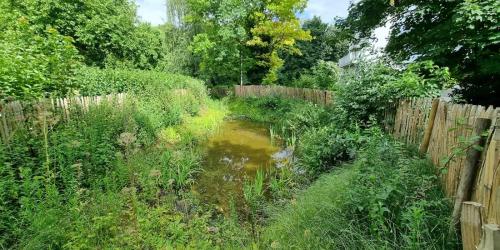
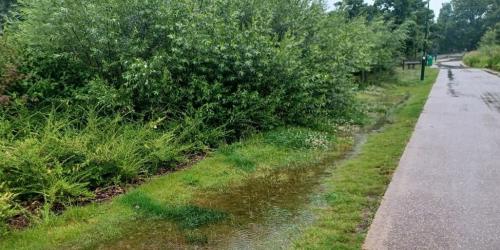
As part of the RAINBOW project, the City of Brussels is applying integrated rainwater management measures: rainwater infiltration, de-sealing, greening and rainwater reuse.
These actions are being deployed as a priority in municipal schools and theatres, in collaboration with local stakeholders and regional authorities (Bruxelles Environnement, Vivaqua).
To apply its part of the project, the City of Brussels is working with the Université Libre de Bruxelles (ULB) and the Coordination Senne association, both project partners.
The RAINBOW project focuses on 5 areas of work:
- developing solutions for adapting to climate change and preventing water-related risks
- restoring urban water cycles through infiltration and groundwater recharge
- supporting the application of the 'sponge city' concept
- networking scientific, technical and administrative expertise among partners
- involving local stakeholders and citizens in the process
The project is based on an operational approach: each partner city tests solutions at one or more pilot sites. The results are then shared among participating cities. These lead to a roadmap and operational recommendations at the level of the Interreg NWE programme.
This work is made possible thanks to the support of the European External siteInterreg North-West Europe programme. This programme funds cooperation projects between cities, universities, associations and other stakeholders in North-West Europe.
Partners pool their expertise in hydrology, spatial planning, water management, data analysis and citizen engagement. In this way they develop useful solutions for other European cities facing the same challenges.
The RAINBOW project brings together 9 partners from 4 countries: Belgium, Germany, France and the Netherlands. These include cities, universities and research institutes.
The partners are:
- City of Stuttgart (Lead Partner)
- University of Stuttgart
- TU Dortmund University
- Municipality of Zwolle
- City of Brussels
- Université Libre de Bruxelles
- Lens-Liévin municipality
- French Geological Survey
- Coordination Senne
Programme: Interreg NWE
Period: January 2026 - June 2029
Total budget: 5.7 million euros
EU funding: 3.4 million euros (around 60% of the total budget)