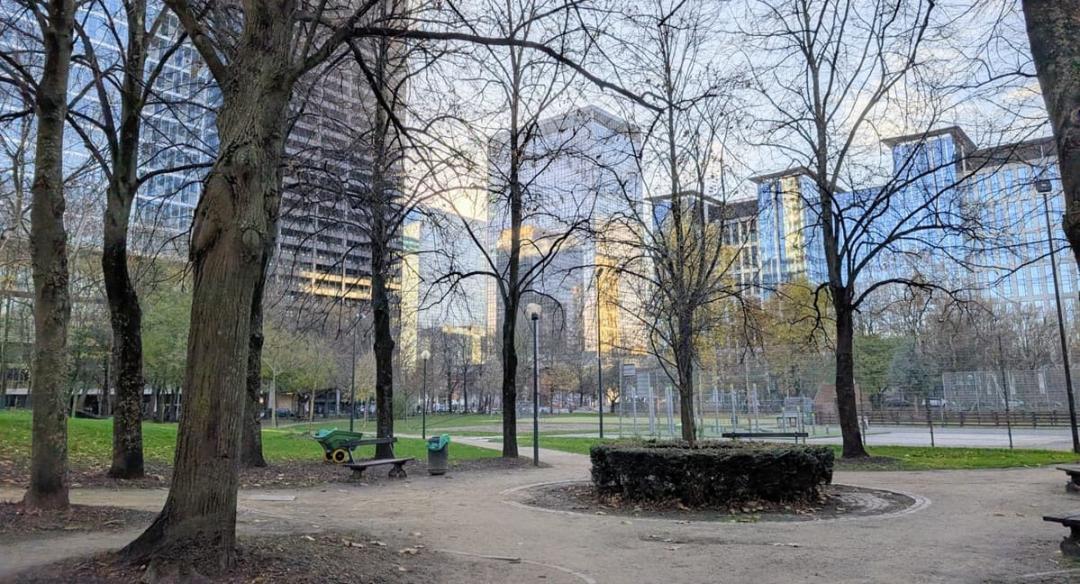
The project, which has been under consideration since 2020, is now taking shape: in addition to the future 5th generation heat network, the first part of the North Quarter will become a 'Positive Energy District' (PED).

PED in the North Quarter: ±50 hectares
Key innovation: 5th generation heating network - geothermal energy in public spaces
Urban fabric: avenues - mixed neighbourhood - offices - residential towers
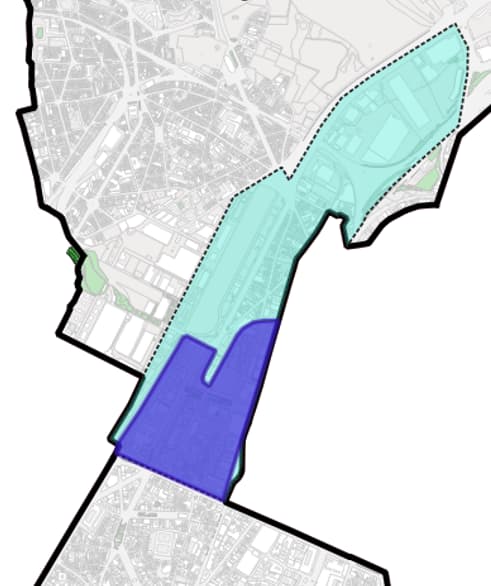
The perimeter of the PED, which officially began in December 2025 with thermal response tests, has not always been as it is today.
Since 2020, the coordination platform, the European projects External siteCities4PED and RESPONSE, and then, in 2024 and 2025, the studies commissioned by the City on solutions and energy monitoring for the North Quarter laid the foundations for the future energy-positive districts. Together, they made it possible to clarify the project's ambitions and prepare for the arrival of neighbourhood-level energy transition initiatives.
Initially, the study area named PED 'North Quarter' was much larger (± 170 ha) and stretched 3 km east of the canal: from Sainctelette to the edge of Mabru.
In 2025, the project for a heating and cooling network in the Maximilian neighbourhood offers an excellent opportunity to create an energy-positive district. The large study area will then be divided into 3 relevant sectors in order to focus on an initial PED, covering approximately 50 ha in the south of this study area.
For this first Positive Energy District that the City wants to bring to fruition, the objective is clear: to demonstrate, on a real scale, how a Brussels neighbourhood can significantly reduce its fossil fuel consumption, produce more local carbon-free energy and better share resources between buildings.
The PED plays the prestigious role of a neighbourhood 'ahead of its time' and enables the City to:
- Welcome and familiarise itself with a 5th generation heating and cooling network
- Test the interest in and develop procedures for the installation of geothermal power plants under public spaces
- Experiment with energy monitoring tools at neighbourhood level
- Develop new forms of cooperation between residents, public authorities, economic actors and associations
If you live or work in the area, you will gradually see the neighbourhood change. Initially, this may involve:
- occasional construction works in public spaces (laying pipes for the heating and cooling network, geothermal drilling, redevelopment of the Maximilian Park)
- energy renovation of certain buildings
- installation of heat pumps, solar panels or other low-carbon equipment
New information and monitoring tools (maps, dashboards, indicators) will quickly appear to show what is changing and what benefits this brings to the climate, the neighbourhood's energy independence and the quality of life of residents and workers.
Ultimately, the aim is for these transformations to result in:
- more comfortable buildings that are less sensitive to heatwaves (through access to low-carbon, low-cost cooling, for example) and less dependent on fossil fuel prices
- a more pleasant neighbourhood to live in, where public spaces (such as the Maximilian Park) play a dual role as living spaces and energy infrastructure for the benefit of all
And this is only the beginning, a launch for the PED. The rest remains to be invented!
The PED is not just a matter for engineers and pipes: it also relies on the involvement of residents, users and organisations. Several forms of participation will be developed throughout the project.
The City of Brussels and its partners will communicate regularly on the stages of the project and opportunities to get involved. Initiatives are also welcome. Please send them to:
The idea is simple: the more people who live, work and walk around the neighbourhood are involved in the decisions, the more the positive energy neighbourhood will be fair, adapted to real uses and needs, and easy to replicate elsewhere in the City of Brussels.
You own a building within the PED perimeter? And you would like to connect to the future heating and cooling network? Then join the community of interested parties.
To do so, send an e-mail to ped@brucity.be with the address and type of property (single-family home, apartment building, shop, office,...).
This information will help the City and its partners to better assess the neighbourhood's connection potential, inform you of the next steps and, when the time comes, contact you about specific connection opportunities.

