
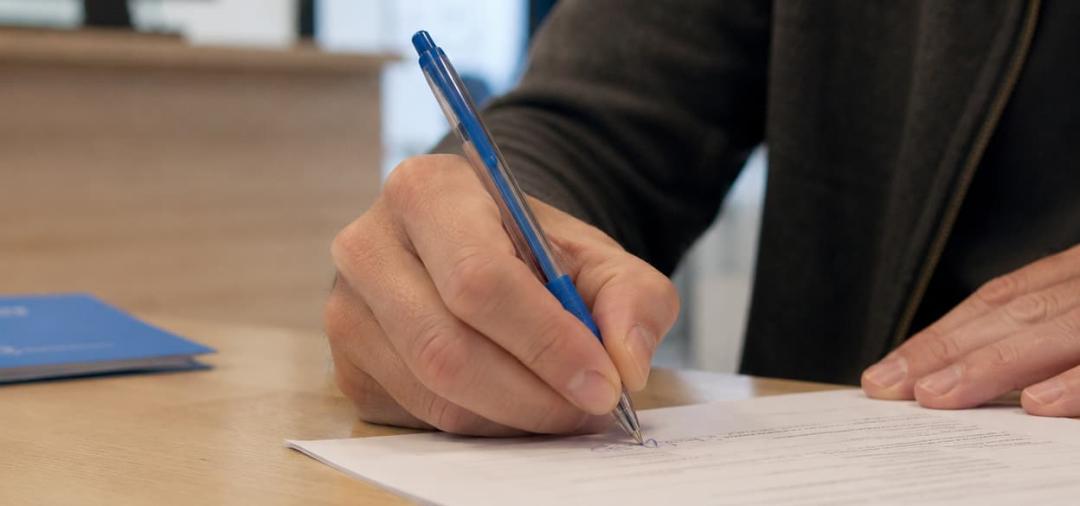
Do you need your signature to be officially authenticated? The legalisation of a signature confirms that the signature is genuinely yours, without validating the content of the document.
- You must have your main residence within the territory of the City of Brussels
- You must present the document on which the signature is to be legalised
- The document must be written in French or Dutch
- You must sign the document in the presence of the municipal officer
Without appointment, at the counter of the Administrative Centre of the City of Brussels or the liaison offices of Laeken, Louise, Haren and Neder-Over-Heembeek.
Brucity: peak hours at the counters without appointment
- Identity card or residence permit
- The document to be legalised, written in French or Dutch
- If acting by proxy: the power of attorney, a copy of the applicant's identity card or residence permit, and the signed document containing the original signature to be legalised
Free of charge
Immediately
The legalisation of a signature certifies that the signature appearing on a document genuinely belongs to the person concerned.
The administration does not approve or validate the content of the document; it only confirms the identity of the signatory.
The officer asks you to sign the document in their presence and compares the signature with the one appearing on your identity card or passport.
The legalisation of signatures is a municipal responsibility.
It is carried out by an authorised municipal officer or by the Mayor or an Alderman if the document is intended for use abroad.
Legalisation of a signature confirms that the signature belongs to the correct person and matches the signature on the identity document.
Certification of a copy confirms that the copy is identical to the original document.
Yes, you must appear in person with proof of identity and sign the document on site.
A signature can also be legalised by proxy.
The person granting the power of attorney must provide the authorised representative with a written, dated and signed authorisation, together with a copy of both sides of their identity card or residence permit.
The representative must also hold a valid identity card or residence permit.
Yes, provided that the signature on the document matches the one on the identity card.
If there is any doubt, the legalisation may be refused and you may be asked to sign the document again on site.
No. The officer may refuse to legalise a document if:
- it contains a signature on a blank sheet of paper
- the document is contrary to public order or public morality
- the document is incomprehensible